
Is a Mortgage Haram in Islam?
Most Islamic scholars consider a conventional mortgage haram because it involves riba (interest). But a well-constructed Islamic mortgage is halal. Guidance Residential’s halal co-ownership program has helped more than 40,000 American families finance homes without interest, reviewed by an independent Shariah board.
Here is what’s behind the rulings, and what a genuinely halal path to homeownership looks like.
Why Do Muslim Scholars Consider a Conventional Mortgage Haram?
A conventional mortgage is a loan, and the homebuyer pays interest on the loan. That is riba, which Islam prohibits explicitly.
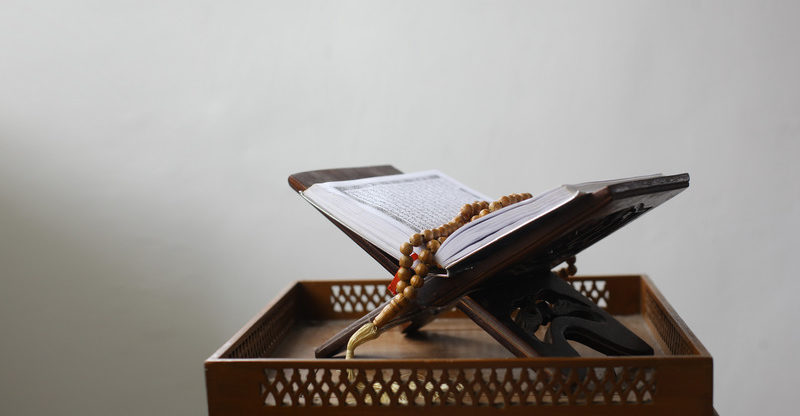
The Quran says:
“Allah has permitted trade and has forbidden riba” (2:275)
The prohibition applies to paying riba as well as charging it.
Riba is not a technicality. In Islamic finance, money is not allowed to earn money by itself. Wealth should come from trade, real assets, and shared risk, according to the basic principles of Islamic finance. A mortgage loan violates all three of those principles: the bank never owns the home, it takes on none of the risks of homeownership, and it earns its return purely from interest on the money it lends.
Does That Mean Muslims Can’t Buy a Home in America?
No, Muslims can buy a home in America through a halal alternative to a traditional mortgage.
Homeownership itself is halal and encouraged. What most scholars prohibit is the interest-based loan typically used to finance it. But authentic Shariah-compliant alternatives now exist in the U.S.
For years, many families believed they had only two options: pay cash or accept a riba-based mortgage. A minority of scholars permitted conventional mortgages under the doctrine of necessity (darura). But necessity is difficult to claim when an authentic alternative is available, and Guidance Residential now offers one in more than 35 states.
How Does Halal Home Financing Actually Work?
Guidance Residential’s Declining Balance Co-ownership Program is based on Musharakah Mutanaqisa, a diminishing partnership. You and Guidance buy the home together as co-owners. Your monthly payments steadily buy out Guidance’s share until you own the home outright. No money is lent, and no interest is charged.
In practice:
- You are co-owners, not borrower and lender. An LLC is created for each home, and both parties hold a real ownership stake.
- Each payment builds your ownership. Part of your monthly payment acquires more of Guidance’s share; the rest is a fee for using the portion of the home you don’t yet own.
- Risk is shared. If the home is lost and insurance falls short, Guidance shares the loss in proportion to its ownership. In foreclosure, there is no recourse to your other assets.
- Appreciation is yours. When you sell, you keep all of the gain in the home’s value.
More than 40,000 families have used it, with the buyer and Guidance purchasing the home together.
For a fuller walkthrough, see how Islamic home financing works in America.
Is an Islamic Mortgage Just Interest With Another Name?
No, an Islamic mortgage is a completely different transaction from a loan.
In a loan, you pay for the use of borrowed money. In co-ownership, you buy shares of your own home and pay for using the share you don’t yet own.
There may be some resemblances externally, as the monthly cost is benchmarked against prevailing rates so buyers can comparison shop, but the structure of the contract is completely different.
The transaction is asset-backed and risk-sharing, two requirements of Islamic finance that no conventional loan meets. A similar rate makes the program competitive; it does not make it a loan. If this question weighs on you, read whether Guidance Residential’s Islamic mortgage is really halal.
Who Verifies That It’s Halal?
Guidance Residential’s program was developed over three years with six leading Islamic finance scholars and 18 law firms, and it is overseen by an independent Shariah Supervisory Board chaired by Justice (Ret.) Mufti Muhammad Taqi Usmani, chairman of the AAOIFI Shariah Board. The scholars’ rulings are published for anyone to review.
The Shariah board includes internationally recognized scholars from the U.S., Bahrain, Saudi Arabia, Pakistan, and Malaysia, and its rulings (fatwas) are publicly available. Guidance is also Muslim-owned and unaffiliated with any riba-based bank, so the funds behind your home do not come from interest.
Frequently Asked Questions
Is paying interest as serious as charging it?
Yes. The prohibition of riba covers both sides of the transaction. In a well-known hadith recorded in Sahih Muslim, the Prophet (peace be upon him) cursed the one who consumes riba, the one who pays it, the one who records it, and those who witness it.
Is halal home financing more expensive than a mortgage?
No. It used to cost more, but today the overall cost is competitive with a conventional mortgage.
Is it harder to qualify?
No. The process is very similar to a conventional mortgage: you apply, submit documentation like tax forms and pay stubs, and complete a credit check.
Why does the profit rate look like an interest rate?
Guidance benchmarks its rate against the cost of conventional financing. This allows you to compare offers easily. The number looks similar, but you are not borrowing money. You are buying out a co-owner’s share of your home.
Do I need a large down payment?
No. You can start with a down payment of 5%, and in some cases 3%. Many homebuyer assistance programs can also be used with Guidance financing.
Is Islamic home financing only for Muslims?
No. Anyone can access this equitable, asset-backed, risk-sharing alternative to an interest-based loan.
Ready to Learn More?
Guidance Residential has provided more than $12 billion in financing to more than 40,000 families over 25 years. If you’re ready to explore halal financing for your home purchase, start with a quick pre-qualification. It’s free, fast, and there’s no obligation.
Learn more and get started on your home finance journey today.
Written in July 2026.