

Teaching Kids the Joy of Giving in Ramadan
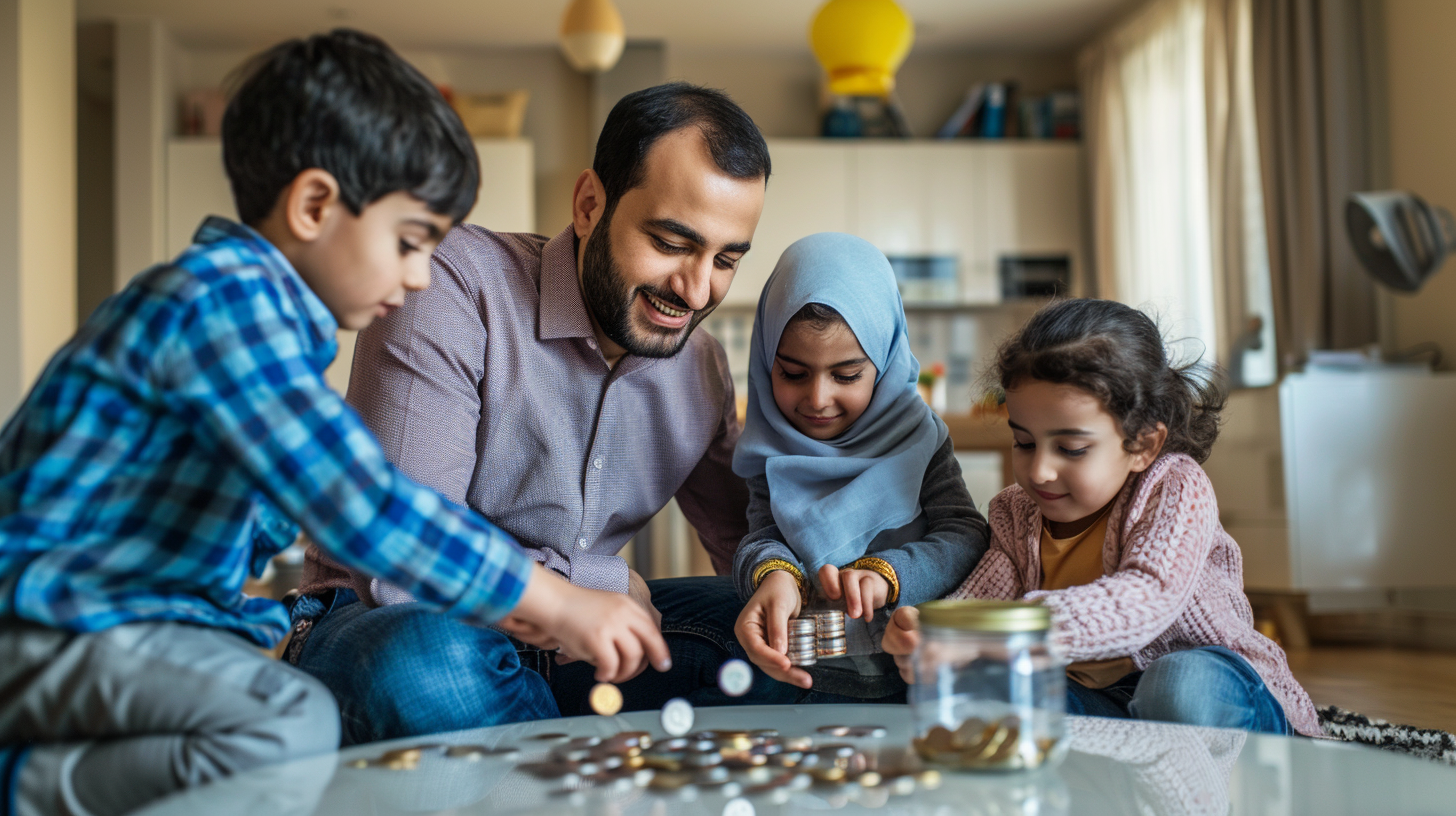
Ramadan is more than a month of fasting — it’s a season of reflection, deep spiritual growth, and sharing with others. For families, it’s also a beautiful opportunity to nurture generosity and gratitude in children.
Even if kids aren’t fasting yet, the Ramadan season offers countless lessons that can shape their character for life.
The Importance of Ramadan
Ramadan is observed by Muslims worldwide as a month of fasting, prayer, reflection, and community.
Ramadan is the ninth month of the Islamic calendar, a time when Muslims around the world focus on strengthening their relationship with Allah (God in Arabic).
Ramadan is the month when the first verses of the Qur’an were revealed. After Ramadan begins, Muslims fast from dawn to sunset every day — no food or drink, not even water. This continues for 29 or 30 days. The new moon marks the end of the holy month of Ramadan, and the Festival of Fast-Breaking, Eid al-Fitr, begins.
But Ramadan not just about food, it’s also about self-improvement and personal growth in many forms.
Muslims also often read more Quran during this month, ideally reading the entire Quran at least once. They also do extra prayers, including special prayers at night called tarawih. Mosques fill with families late into the night for tarawih prayers.
Ramadan Lessons
By refraining from food and drink for 12-18 hours, Muslims grow in compassion, self-discipline and self-control. The fast also teaches empathy, especially with those who are hungry. As a result, Muslims traditionally share food with others and give more charity during Ramadan.
In fact, one of the core lessons of Ramadan is generosity. Muslims are encouraged to give more during this month through zakat (obligatory charity), sadaqah (voluntary charity), and simple acts of kindness.
Islam also teaches that the fast is not beneficial if the person’s speech or behavior are hurting others, so Muslims are especially careful to control anger and avoid gossip and other harmful speech or actions.
Family Life in Ramadan
The rhythm of daily life changes in Ramadan.
Fasting Muslims typically wake up before the sun rises for an early morning meal called suhoor, followed by the morning prayer. Then they work and students go to school as usual during the day.
The late afternoon is typically a time of rest, reading, and preparing for the evening meal. Then families and friends gather to eat dinner together after the sun sets, and then they may go to the mosque for tarawih prayers.
For children, even those too young to fast, this change in routine makes a deep impression. They often cherish the shared meals, special events, and spending time together with loved ones. These experiences help kids understand that Islam is not only about rules, but also about values and community.
Are Kids Exempt From Ramadan?
Yes. Children are not required to fast until they reach puberty. Islam recognizes that kids are still growing and developing, and their health and well-being always come first.
That said, many families gently introduce fasting in age-appropriate ways so children can gradually become comfortable with the practice when they are adults.
What Are the Rules of Ramadan for Kids?
There is no fixed age when children must start fasting. Many families begin to encourage children to take part in short or partial fasts around ages 7–10, depending on the child’s physical and emotional readiness.
Things families should know:
- Fasting is encouraged, not forced
- Kids should stop fasting if they feel unwell
- Hydration and nutritious meals are especially important
- Children are still expected to practice good behavior: honesty, kindness, patience, and respect
Forbidden behaviors such as lying, hurting others, or being disrespectful are teaching moments during Ramadan. Parents can discuss these incidents with their kids, helping them understand that fasting is about character, not just food — and that they can make up for mistakes and do better in the future.
How Can Kids Participate in Ramadan?
Even without fasting all day, children can fully participate and celebrate Ramadan. Here are some ways they can take part in this special month:
Fasting and Food Preparation:
- Kids can fast for a few hours or half a day
- They can help prepare iftar meals
Worship:
- They can join family prayers at home
- They can go to the mosque for evening tarawih prayers
Fun and Lessons:
- Kids love Ramadan calendars (similar to advent calendars)
- They can create a charity jar or do a daily good deeds challenge
Teaching Children the Lessons of Ramadan
One of the many lessons Ramadan teaches is contentment: being grateful for what we have and mindful of those who have less. When they experience hunger, even briefly, children understand what others go through.
Parents can encourage empathy and gratitude with questions like these:
- “How can I help someone today?”
- “What am I grateful for?”
- “How does giving make me feel?”
Kids often discover that giving brings joy, pride, and a sense of purpose.
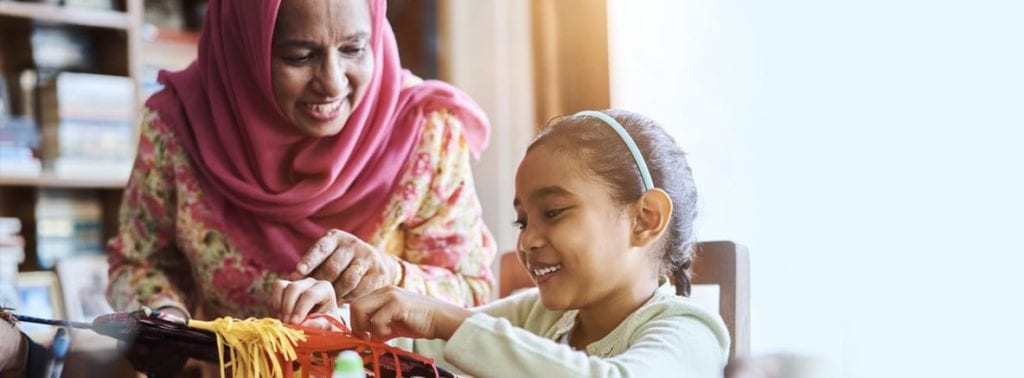
Teaching Kids Generosity During Ramadan
Generosity is another one of the important lessons of Ramadan.
Prophet Muhammad was reported to have been especially generous in Ramadan. He was once asked, “Which charity is best?” He (peace be upon him) said: “Charity in Ramadan.”
How can parents teach generosity?
Children can learn about generosity through stories that highlight characters demonstrating giving. But even better is modeling. Children learn best by observing the adults around them.
Children learn generosity when they:
- See parents giving to those in need
- Share food with neighbors or classmates
- Donate toys, clothes, or savings
- Help others without expecting anything in return
Ramadan teaches kids that generosity isn’t just about money—it’s about time, care, good manners, and empathy.
Hands-on Activities to Teach Generosity
Doing charitable acts together is one of the best ways to teach children to be generous.
Volunteering as a family teaches children about generosity and helps them feel capable and connected, and children can be empowered to lead their own fundraisers to support causes they care about. Involving children in activities like donation drives makes the impact of their efforts tangible and visible.
Here are some options for activities families and communities can do together:
- Collect canned goods and bring them to a food bank
- Volunteer to hold a bake sale for charity at the mosque
- Make cards for sick people or older family members in different states or countries
- Gather new toys to give to kids from less fortunate families for Eid
These activities help children feel included and excited about the month.
Tips for Effective Teaching
In addition to hands-on activities, teaching is most effective when parents combine modeling with clear instruction and discussion.
Talk about why you engage in acts of generosity to turn those actions into teachable moments for children.
When teaching kids to share, beware of forced sharing, which often leads to resentment. Children should be encouraged to negotiate their own solutions instead.
Then notice behavior you want to encourage, and praise the child. Positive reinforcement of generous behavior encourages children to repeat such actions. Using specific verbal praise is more effective than generic labels when encouraging kindness. Celebrating acts of kindness that you notice will help children understand the impact of their actions and encourage them to continue being generous.
Teaching Children Islamic Finance Practices
Ramadan is a great time to introduce basic Islamic finance concepts in a simple, child-friendly way:
- Zakat: Explaining how Muslims share wealth to help others
- Sadaqah: Encouraging voluntary giving, even small amounts
- Halal earnings: Teaching honesty and fairness in money
Here are practical ways to teach these lessons:
- Set aside part of their allowance or even gifts they receive for charity. The Three-Jar Habit is a good one to continue year-round. It involves allocating money into Spend, Save, and Give jars to encourage financial generosity.
- Let kids choose where donations go.
- Remind them that money is a trust from Allah, not just something to spend simply because they have it.
These lessons build financial responsibility rooted in faith and ethics.
Final Thoughts
Teaching kids about generosity during Ramadan is less about lectures and more about lived experience. When children see generosity modeled with love, patience, and joy, they absorb its meaning naturally.
Ramadan becomes not just a month they remember, but a value system they carry with them for life.
Ramadan Wishes from Guidance Residential
Ramadan Kareem! If you’re looking for a new home to spend next Ramadan in, we would be happy help.
Guidance Residential remains the #1 U.S. Islamic home financing provider, with more than 40,000 families assisted over more than 20 years. Learn more about our co-ownership model of Islamic home financing, and get started on your home finance journey today.
Your Guidance Residential Account Executive is here to help with any questions. Looking to refinance or purchase? Have a friend or family member who is looking for a home? Call 1.866.Guidance, or start an application today.