
A History of Islamic Finance in America

Every American has a right to participate in economic society, to own a home, and to achieve their long-term dreams. And they also have a right to practice their faith to the best of their ability which, in many cases, means abstaining from participation in any interest-based forms of financing.
As interest is built into the Western financial system, this has created a unique set of conflicts for American Muslims.
In response to this ongoing need, new forms of faith-friendly financing have emerged in recent decades. Despite Islam’s general prohibition against interest-bearing loans (a term that describes most mortgages issued in the United States), it is now possible for many Muslims to ethically purchase a home with more money than they currently possess. Achieving the American Dream of homeownership and adhering to the basic tenets of Islam is more possible than ever before.
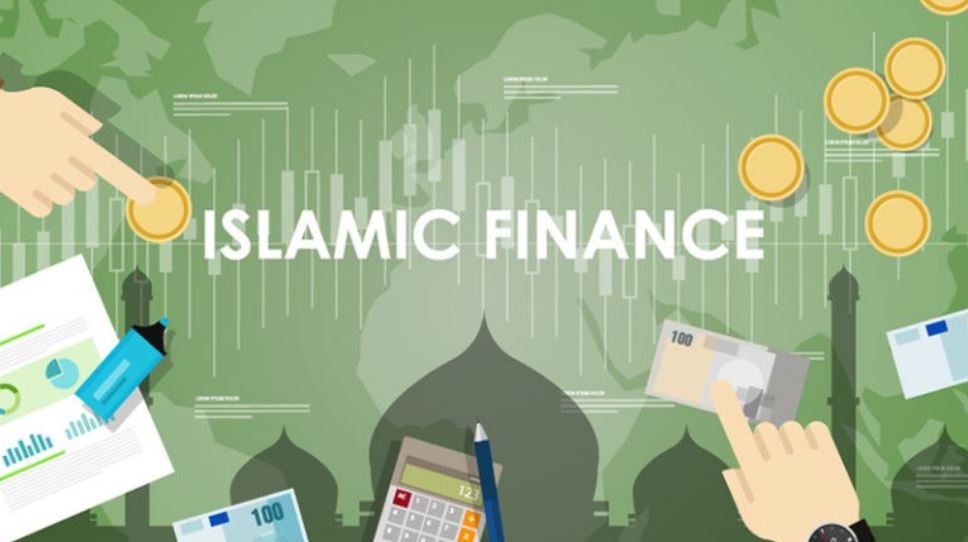
In this guide, we will discuss the most important things to know about Islamic finance, including what it is and how it can help Muslims faithfully secure major purchases.
Using Money for Good
For as long as money has existed, it has been a consistent enabler of both prosperity and conflict. Money can be used as a medium of exchange that can serve to benefit people. But in the worst of times, money can contribute to problems including war, corruption, exploitation, and more.
For better or for worse, money has become a permanent component of the international economic system. But how this resource can be used effectively while avoiding its pitfalls remains an ongoing matter of debate.
Many world religions have consistently warned about the risks presented by the use of money, particularly, usury, or the act of collecting interest.
Islam and other monotheistic religions consider the use of any type of interest to be exploitative, just as most people currently consider the use of “payday loans” and other forms of excessive interest-bearing financing to be exploitative for consumers today.
The primary focus of the Islamic prohibition of usury, or riba, has been justice. While it might seem as if borrowing with interest can be temporarily beneficial for many people, the ultimate consequence of participating in this system is injustice: The rich see vast growth in their wealth as a result of taking advantage of those who are in need, while the poor become relatively poorer due to the broader expansion and corruption of the debt and monetary system.
A Short History of Islamic Finance
Muslims had a rich financial system for centuries, dating back to the days of Prophet Muhammad.
The Quran clearly bans interest, as do other major religions.
“Allah has permitted trade and has forbidden Riba.” (Quran 2:275)
Many of the early Muslims were traders and businesspeople. In fact, trade played a major role in the spread of Islam. And as Islam spread, so did its financial system, which was standardized across continents by shared Islamic principles. It proliferated throughout the Islamic Golden Age, until Colonialism put a stop to it.
After World War II, Islamic institutions in many Muslim countries were in disarray, and Colonial powers installed their own banking systems, along with the practice of lending and charging interest.
Looking for Alternatives
The issue of the use of riba has been revisited many times throughout Islamic and global economic history. In the 1970s, there was a considerable revival of the broader dialogue regarding riba throughout the Muslim world. This was a period where the existence of the “global financial system” was seemingly unavoidable, but many Muslims began looking for alternative options for investment and daily finance.
Following a series of several international Conferences on Islamic Banking, Muslims had their first genuine opportunity to establish an interest-free banking community. These conferences were critical not only for people living in Muslim-majority nation but especially for Muslim minorities living in the U.S., UK, and elsewhere throughout the world.
During these conferences, scholars were in agreement that the collecting or paying interest was considered riba (which is haram, or forbidden by Islamic Law). As a result, it appeared that any middle-class Muslim who wanted to secure a mortgage while maintaining their adherence to principles of Islamic law would need to look outside of the traditional mortgage system.
Emergence of Islamic Options
Over the next few decades, the emergence of Islamic Banking would gain quite a bit of traction in the west. The need for alternative banking options was especially high in countries, including the U.S. and UK, that had fast-growing Muslim populations.
Islamic finance and Islamic banking are like many other socially responsible investment structures; there is a large group of people (more than 7 million in North America) who have a specific set of needs and values, and financial institutions have adjusted themselves accordingly.
What Does Islamic Finance Look Like in America?
In the past, Muslim entrepreneurs and nonprofits often found themselves forced to assemble all needed capital before starting a project or launching a business, and many faith-conscious Muslim families found a way to obtain mortgage financing that is consistent with their religious beliefs.
Today, Muslims can now ethically finance major purchases such as mortgages while also maintaining their faith and adhering to the prohibition of interest. These financing products are created to remove barriers to accessing capital for Muslim entrepreneurs and nonprofits. Islamic finance operates under the supervision of Sharia boards, panels of scholars who ensure compliance with Islamic law.
This has represented a major transformation in the global banking system, as well as a significant movement towards justice. Islamic finance is part of a broader movement toward ethical and socially responsible investing, appealing to a wider audience beyond Muslims.
Can Muslims Avoid Interest?
Since the United States is heavily reliant on the use of interest-collecting financial institutions for mortgages, credit cards, and other types of financing, this has created a unique set of challenges for many Muslims.
Any dealings with banks do involve interest. Even on a checking account that doesn’t accrue interest, the bank uses the funds toward its other interest-related enterprises.
However, there are Islamic financial institutions that provide truly Shariah-compliant services.
Are There Sharia Banks in the U.S.?
Muslims may wonder: Can I find an Islamic bank near me?
The answer, unfortunately, is probably not yet.
Islamic finance does exist in the United States, but it looks a little different from what you might see in countries in the Middle East.
Unlike some Muslim-majority countries, we don’t have large, full-service Islamic banks in America. Instead, Islamic banking in the U.S. is made up of specialized financial companies that offer Sharia-compliant products like investment products or mortgages.
There are a few reasons for this:
- Regulatory complexity – U.S. banking laws were designed around interest-based lending.
- Smaller market – The Muslim population is growing but still smaller compared with markets where Islamic banking dominates.
- Structural differences – Islamic finance relies on asset-based partnerships rather than simple loans, which can be harder to structure within existing regulations.
Even though the sector is still small, Islamic finance in the U.S. is growing steadily as demand rises among Muslim Americans and others who are interested in ethical finance.
How Can I Get an Islamic Loan USA?
Islamic loans in the USA are structured differently from a traditional loan. In fact, they typically aren’t loans at all.
Instead, Muslim financing companies use other structures like co-ownership to help people finance specific items such as homes or sometimes cars or businesses.
How Can I Get Islamic Financing for My Home?
While full-service banks may not yet be widely available in the United States, Islamic home financing is now accessible.
Three Models of Islamic Financing
There are three main models of Islamic financing options in the West.
1. Murabaha (cost plus)
In the murabaha model of Islamic financing, the bank or financier buys the home and sells it to the customer at a marked-up price, to be paid over time. This avoids interest, but a downside is that this practice does not include the principle of risk sharing, which is an important principle in Islamic finance.
2. Ijara (rent to own)
In the ijara model, the financier buys the property and rents it to the homebuyer, with a portion of the payment going toward the purchase of the property. A downside of this model is that the homebuyer does not own the property until the contract term is complete, often 30 years later.
3. Musharaka
In the musharaka model, the financier will buy the home together with the homebuyer. Rather than paying interest, the homebuyer will continue buying a larger portion of their home from their original financing partner until, eventually, they own the entire property. In this partnership-based model, the homeowner enjoys ownership rights from the beginning, and risk is shared between the two parties.
In most cases, this equitable model is the most suitable in the West, and it’s the one Guidance uses.
Common Misconceptions About Islamic Finance
While many people know about the existence of Islamic finance, many misconceptions still exist. Here are a few of the most common misconceptions about the Islamic financial system, which might be relevant to both Muslims and non-Muslims alike.
Myth 1: The experience of acquiring an Islamic-financed loan will be much different than acquiring a traditional loan.
There are clear differences between Islamic and traditional financing—especially regarding the general use of interest. However, contrary to what many assume, the experience for the homebuyer is not that different. Both methods involve financing a home and setting up a payment structure. However, what makes both Islamic banking and Islamic financing unique is that the Islamic system avoids interest and, therefore, is compliant with Islamic principles.
Myth 2: The only people who can apply for an Islamic-financed mortgage are Muslims.
Fact: While these mortgages are designed for the Muslim community, they are available to everyone, regardless of their faith. This more equitable method of financing is growing in popularity among the broader community as well.
Myth 3: Islamic financing is exceptionally complicated.
Fact: It is clear that Islamic financing is different from traditional financing. But that doesn’t mean the process needs to be more complicated. In fact, depending on the financier, it can be even more streamlined and accessible.
Myth 4: Islamic financing costs more than traditional financing.
Fact: While initially Islamic finance in America used to cost more than a traditional mortgage, this is no longer the case. Halal mortgages are now competitive with traditional loans.
Myth 5: Islamic financing is uncompetitive in the current marketplace.
Fact: It might be easy to assume that Islamic financing, which is more ethics-focused, can’t compete in the current environment. But it is indeed competing—and growing.
How Can I Find a Halal Mortgage in the U.S.?
Several U.S. banks offer what they call Islamic mortgages, but homebuyers may prefer to look for an institution that does not earn income from riba as banks do.
Guidance Residential is the #1 U.S. Islamic home finance provider, offering halal mortgages in more than 35 states. More information is available online.
Why Is Islamic Finance Important?
For many Muslims, the code of ethics outlined in the Quran is guidance for their daily life. Something prohibited in the Quran needs to be avoided to the greatest extent possible.
In a country that is founded upon the principle of freedom of religion, like the U.S., this means that Islamic financing is not something that should be considered a “niche” component of the financial system, but one that is made readily available.
Ready to Learn More About Islamic Financing for Your Home?
Buying a home is one of the most important decisions you will make. The team at Guidance Residential is here for you every step of the way, from pre-qualification and pre-approval on through to finding the right real estate agent for you and your family. We invite you to explore the home buying process with Guidance Residential today.
Guidance Residential remains the #1 U.S. Islamic home financing provider. Over the past 20 years, we have assisted more than 40,000 families. Learn more and get started on your home finance journey today.
Your Guidance Residential Account Executive is here to help with any questions. Looking to refinance or purchase? Have a friend or family member who is looking for a home? Call 1.866.Guidance, or start an application today.
Written in August 2022; updated in November 2025.